
You are here
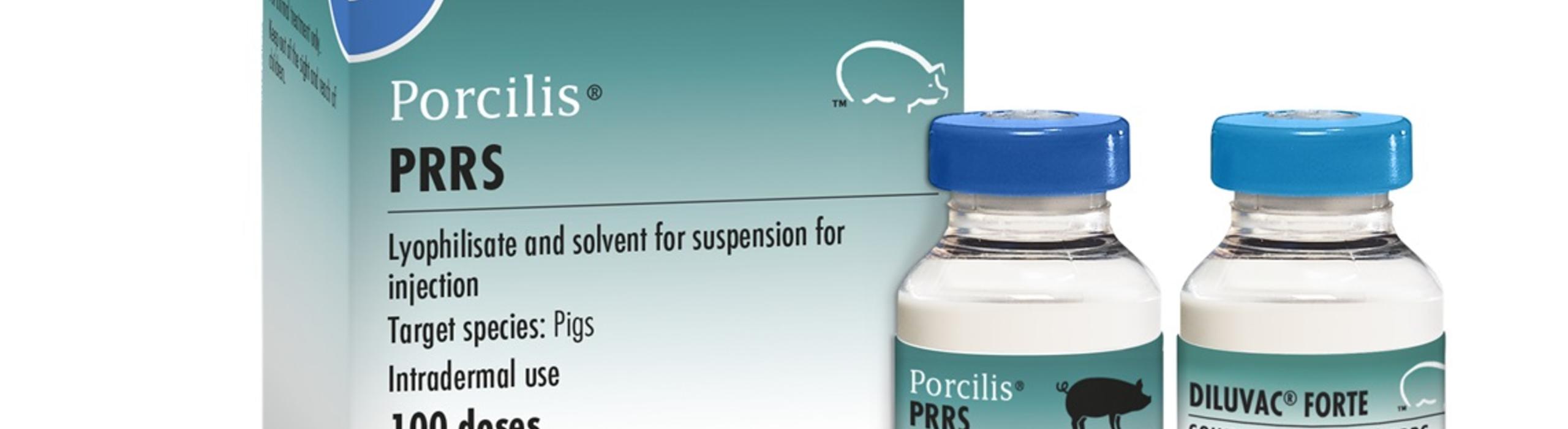
Porcilis® PRRS Lyophilisate and solvent for suspension for injection for pigs
PRRS virus can compromise the health, growth and profitability of finishing pigs by causing respiratory problems. Breeding pigs can also be vaccinated with Porcilis PRRS giving a significant improvement in reproductive performance in PRRS positive farms. Porcilis PRRS is a live freeze-dried vaccine.
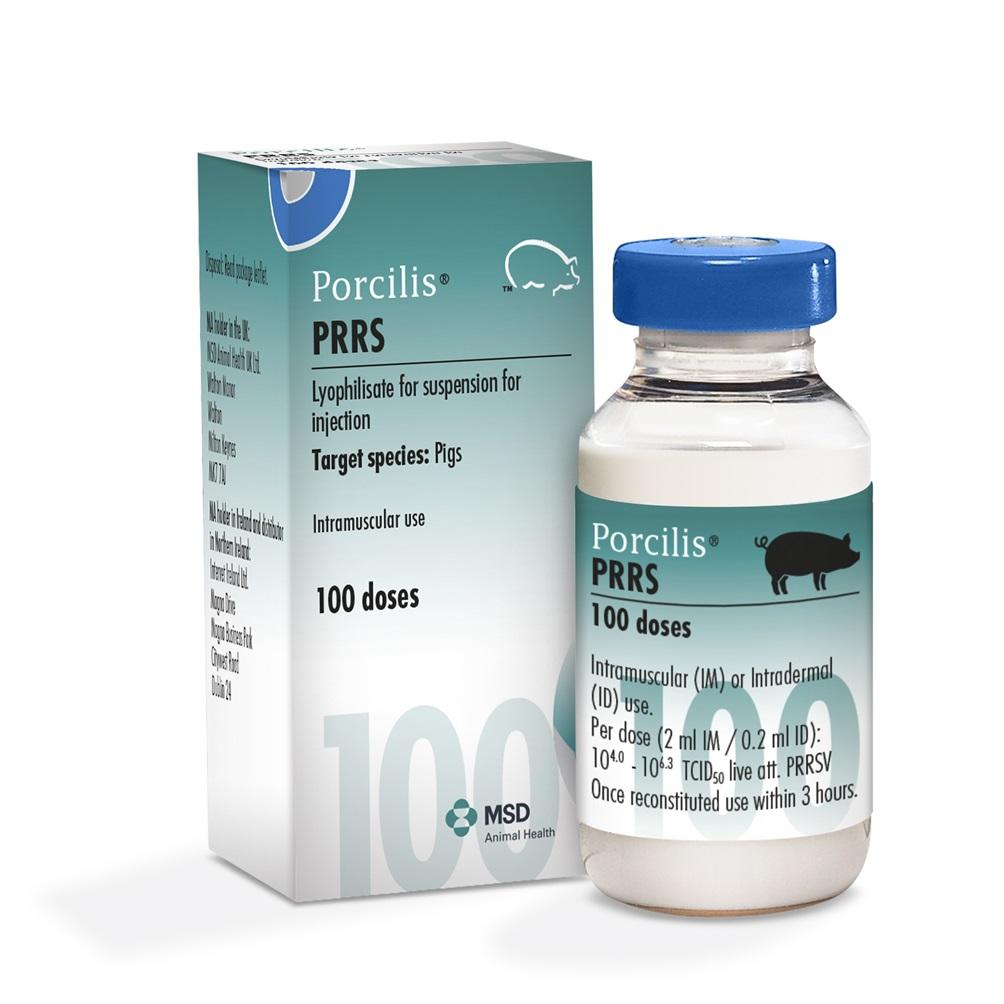
Presentation
Lyophilisate and solvent (Diluvac® Forte) for reconstitution to a suspension for injection.
Active ingredients
Per dose of 2 ml (intramuscular application) or 0.2 ml (intradermal application) of vaccine reconstituted with Diluvac Forte:
- Live attenuated PRRS virus strain DV: 104.0 - 106.3 TCID50*
- Adjuvant: dl-α‑tocopheryl acetate: 75 mg/ml
*Tissue Culture Infective Dose 50 %
Target species
Pigs
Indications for use
For active immunisation of clinically healthy pigs in a PRRS virus contaminated environment, to reduce viraemia caused by infection with European strains of PRRS virus.
For finishing pigs, the effect of the virus on the respiratory system is most relevant. A significant improvement of rearing results (reduced morbidity due to PRRS infection, and a better daily growth and feed conversion) until the end of the fattening period was observed in vaccinated pigs during field trials, particularly in piglets vaccinated at 6 weeks of age.
For breeding pigs, the effect of the virus on the reproductive system is most relevant. A significant improvement of the reproductive performance in PRRS virus contaminated environments and a reduction of transplacental virus transmission after challenge was observed in vaccinated pigs.
The interest of vaccination with Porcilis PRRS lies in obtaining a homogeneous and high immune status against PRRS virus in a herd.
Onset of immunity: 28 days post vaccination.
Duration of immunity: at least 24 weeks.
Dosage
Intramuscular injection: 2 ml in the neck.
Intradermal application: 0.2 ml on top or to the left or right side of the neck, or along the muscles of the back, using an intradermal device (IDAL).
Vaccination scheme:
A single dose is given to pigs from 2 weeks of age onwards.
Finishing pigs: A single vaccination is sufficient for protection until slaughter.
Breeding pigs: For gilts a (re)vaccination 2-4 weeks before mating is recommended.
To maintain a high and homologous level of immunity, revaccination at regular intervals is recommended, either before each next gestation or at random at 4 month intervals. Pregnant sows should only be vaccinated after previous exposure to European PRRS virus.
Special precautions for use:
Care should be taken to avoid the introduction of the vaccine strain into an area where PRRS virus is not already present. The vaccine virus may spread to pigs in contact during 5 weeks after vaccination.
The most common spreading route is via direct contact, but spreading via contaminated objects or via the air cannot be excluded. Care should be taken to avoid spread of vaccine virus from vaccinated animals to unvaccinated animals (e.g. naïve pregnant sows) that should remain free from PRRS virus.
Do not use in boars producing semen for seronegative herds, as PRRS virus may be excreted in semen for many weeks.
Do not routinely rotate two or more commercial PRRS MLV vaccines based on different strains in a herd.
In order to limit the potential risk of recombination between PRRS MLV vaccine strains of the same genotype, do not use different PRRS MLV vaccines based on different strains of the same genotype on the same farm at the same time. In the case of transitioning from one PRRS MLV vaccine to another PRRS MLV vaccine, a transition period should be respected between the last administration of the current vaccine and the first administration of the new vaccine. This transition period should be longer than the shedding period of 5 weeks following vaccination.
PRRS virus-naïve breeding animals (e.g. replacement gilts from PRRS virus-negative herds) which are introduced into a PRRSV-infected herd should be vaccinated prior to first insemination. Vaccination should preferably be done in a separated quarantine unit. A transition period should be respected between vaccination and moving the animals to the breeding unit. This transition period should be longer than the shedding phase of 5 weeks following vaccination.
Vaccination should aim to achieve a homogenous immunity in the target population at farm level.
Withdrawal periods
Pigs – meat 0 days
Packaging
IM presentation
- Cardboard box with 1 or 10 vials with 10, 25, 50 or 100 doses of lyophilisate
- Cardboard box with 1 or 10 vials with 20, 50, 100 or 200 ml of Diluvac Forte
ID presentation
- Cardboard box with 1 or 5 vials with 10, 25, 50 or 100 doses of lyophilisate
- Cardboard box with 1 or 10 vials with 2, 5, 10 or 20 ml of Diluvac Forte
Not all presentations may be marketed.
Legal category
POM-V
Further information is available from the SPC, datasheet or package leaflet.
Advice should be sought from the medicine prescriber.
Prescription decisions are for the person issuing the prescription alone.
Use Medicines Responsibly.
Product images are representations of packaging and may not accurately reflect the current packaging available in the GB marketplace.
Date of preparation: December 2024